
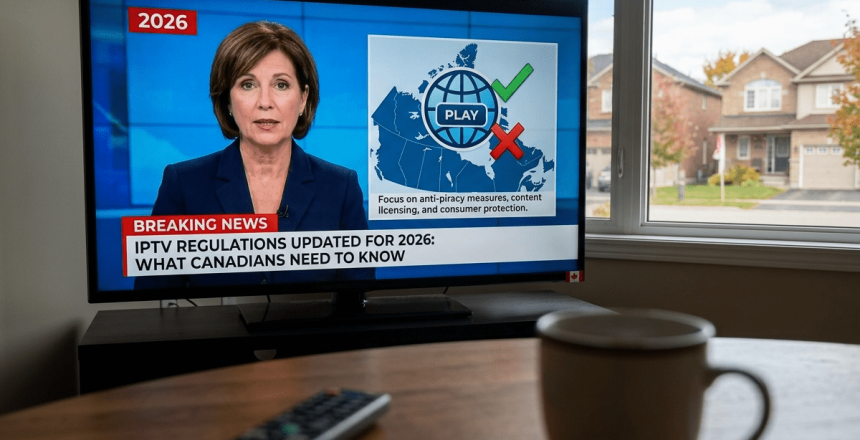
IPTV shut down in Canada: The world of television is rapidly evolving, and Internet Protocol Television (IPTV) has become a popular choice for many Canadians.
As of 2026, the status of IPTV in Canada is a topic of much discussion. With the rise of streaming services, concerns about IPTV regulations have grown.
The Canadian government has been working to establish clear guidelines for IPTV services operating within the country.
This article aims to provide an overview of the current IPTV situation in Canada and what it means for consumers.
Key Takeaways
- Understanding the current status of IPTV in Canada
- Exploring the impact of IPTV regulations on consumers
- Discussing the future of IPTV in Canada
- Examining the role of government in shaping IPTV policies
- Identifying the benefits and drawbacks of IPTV services
What is IPTV and How Does It Work?

IPTV technology allows users to stream television content over the internet, offering a flexible alternative to traditional broadcasting methods. This shift has significant implications for how Canadians consume media.
Definition and Technology Behind IPTV
IPTV, or Internet Protocol Television, uses internet protocol to deliver TV content. Unlike traditional satellite or cable TV, IPTV streams content directly over the internet, allowing for more personalized viewing experiences. The technology behind IPTV involves a complex system of servers, networks, and user devices, all working together to provide a seamless viewing experience.
Different Types of IPTV Services
There are several types of IPTV services available in Canada, including:
- Live TV: Streams live television channels over the internet.
- Video on Demand (VOD): Allows users to select and watch content at their convenience.
- Catch-up TV: Enables viewers to watch previously aired content.
Popularity of IPTV in Canada
IPTV has gained significant popularity in Canada due to its flexibility and the wide range of content it offers. Canadians appreciate the ability to access television programming without being tied to a traditional cable or satellite subscription. As internet speeds continue to improve across the country, the adoption of IPTV services is expected to grow.
The flexibility and variety of IPTV services are key factors in their increasing popularity among Canadian consumers.
Current Legal Status of IPTV in Canada
IPTV services in Canada operate within a legal environment shaped by broadcasting laws and copyright regulations. The legal framework governing IPTV is multifaceted, involving various stakeholders and regulatory bodies.
Canadian Broadcasting Laws
Canadian broadcasting laws play a crucial role in regulating IPTV services. The Broadcasting Act is a key piece of legislation that outlines the framework for broadcasting in Canada, including IPTV. This Act aims to ensure that broadcasting services, including IPTV, contribute to the Canadian broadcasting system and promote Canadian content.
Copyright Regulations Affecting IPTV
Copyright regulations significantly impact IPTV services in Canada. IPTV providers must comply with the Copyright Act, which governs the use and distribution of copyrighted content. This includes obtaining necessary licenses and permissions for the content they distribute. Non-compliance can result in significant penalties.
CRTC's Role in IPTV Regulation
The Canadian Radio-television and Telecommunications Commission (CRTC) is the primary regulatory body overseeing IPTV services in Canada. The CRTC is responsible for enforcing broadcasting laws and regulations, including those related to IPTV. This involves licensing IPTV services, monitoring compliance, and addressing consumer complaints.
The CRTC's regulatory approach aims to balance the need to promote Canadian content and protect consumer interests with the need to foster a competitive and innovative IPTV market.
Recent Crackdowns on Illegal IPTV Services
Recent months have seen a significant crackdown on unauthorized IPTV providers in Canada. This intensified effort by Canadian authorities aims to curb the growing issue of illegal IPTV services, which have been gaining popularity among consumers looking for affordable alternatives to traditional TV broadcasting.
Major Legal Cases in Canada
Several high-profile cases have highlighted the Canadian government's stance on illegal IPTV services. For instance, a notable case involved a major IPTV service provider being sued by a coalition of Canadian broadcasters for copyright infringement. The court's ruling in favor of the broadcasters set a significant precedent, leading to increased scrutiny of other IPTV services.
Enforcement Actions by Canadian Authorities
Canadian authorities, including the Canadian Radio-television and Telecommunications Commission (CRTC), have been actively taking enforcement actions against illegal IPTV services. These actions include shutting down unauthorized services and prosecuting individuals involved in providing these services. The CRTC has also been working closely with international partners to combat the global nature of IPTV piracy.
Penalties for IPTV Providers and Users
The penalties for both IPTV providers and users can be severe. Providers found guilty of copyright infringement can face significant fines and even imprisonment. Users, while generally not targeted as heavily, can still face legal consequences for subscribing to illegal IPTV services. A summary of the penalties is provided in the table below:
| Offense | Penalty |
|---|---|
| Copyright Infringement by Providers | Fines up to $1 million, imprisonment up to 5 years |
| Subscribing to Illegal IPTV Services | Fines, potential legal action |
The crackdown on illegal IPTV services in Canada reflects a broader effort to protect intellectual property and ensure compliance with broadcasting regulations. As the landscape continues to evolve, both providers and consumers must stay informed about the legal implications of IPTV services.
The IPTV Shut Down in Canada: Current Developments
Canada's IPTV market is at a crossroads as new regulations threaten to shut down illegal services. The Canadian government has been tightening its regulations around IPTV services, aiming to curb illegal broadcasting and protect copyright holders.
Recent Legislative Changes
Recent legislative changes have been pivotal in shaping the IPTV landscape in Canada. Bill C-11, also known as the Online Streaming Act, has introduced new compliance requirements for IPTV service providers. As
"The government is committed to ensuring that online streaming services contribute to the Canadian media landscape,"
said a government official, highlighting the focus on regulating online content.
Industry Response to Regulations
The IPTV industry has responded to these regulations with a mix of compliance and resistance. Some providers have begun adapting to the new laws, while others have pushed back against what they see as overly stringent requirements. Licensed IPTV providers are working closely with regulatory bodies to ensure they meet the new standards.
Timeline of Enforcement Actions
Enforcement actions against illegal IPTV services have been on the rise. Key milestones include:
- January 2023: CRTC begins cracking down on non-compliant IPTV services.
- June 2023: Major legal case against an illegal IPTV provider sets a precedent.
- January 2024: New regulations come into full effect, leading to a significant reduction in illegal IPTV services.
The industry continues to evolve as it adapts to these changes, with a clear shift towards legitimate, licensed IPTV services.
Bill C-11 and Its Impact on IPTV Services
Bill C-11, also known as the Online Streaming Act, is set to revolutionize the IPTV landscape in Canada. This legislation aims to bring online streaming services under the same regulatory framework as traditional broadcasters.
Key Provisions of the Online Streaming Act
The Online Streaming Act includes several key provisions that will affect IPTV services. These include:
- Regulatory Oversight: Bringing IPTV services under the purview of the Canadian Radio-television and Telecommunications Commission (CRTC).
- Content Requirements: Mandating that IPTV services promote Canadian content and adhere to specific programming quotas.
- Discovery Requirements: Ensuring that Canadian content is discoverable on IPTV platforms.
Implementation Timeline
The implementation of Bill C-11 will be phased, with different provisions coming into effect at different times. The CRTC will play a crucial role in determining the specific timelines and requirements for compliance.
| Provision | Effective Date | Compliance Requirement |
|---|---|---|
| Regulatory Oversight | January 2024 | Registration with CRTC |
| Content Requirements | June 2024 | 30% Canadian content quota |
| Discovery Requirements | December 2024 | Prominent display of Canadian content |
Compliance Requirements for Service Providers
IPTV service providers will need to comply with the new regulations by adapting their services to meet the content and discoverability requirements. This may involve significant changes to their content offerings and user interface.
Service providers must also be prepared to report on their compliance with the regulations, including the percentage of Canadian content offered and the measures taken to ensure its discoverability.
Legitimate vs. Illegal IPTV: Understanding the Difference
As IPTV continues to grow in popularity, distinguishing between legitimate and illegal services becomes increasingly important. The Canadian IPTV market is diverse, with both lawful and unlawful providers operating within the country.
Licensed IPTV Providers in Canada
Licensed IPTV providers in Canada operate under the regulations set by the Canadian Radio-television and Telecommunications Commission (CRTC). These providers have obtained the necessary licenses to offer television programming over the internet. Examples include major telecommunications companies and some specialized streaming services.
Identifying Unauthorized Services
Unauthorized IPTV services often lack proper licensing and may offer content without the permission of the copyright holders. Consumers can identify these services by looking for red flags such as unusually low prices, lack of clear contact information, and poor customer service.
Legal Risks for Consumers
Consumers using illegal IPTV services face legal risks, including potential fines and penalties. The CRTC and copyright holders are actively working to combat piracy, and consumers may find their access to content restricted or terminated if they are using an unauthorized service.
In conclusion, understanding the difference between legitimate and illegal IPTV services is crucial for consumers in Canada. By choosing licensed providers, consumers can ensure they are accessing content legally and safely.
Impact on Canadian Consumers
As IPTV regulations evolve in Canada, consumers are experiencing changes in content availability and pricing. The shift is primarily driven by the crackdown on illegal IPTV services, which has led to a more regulated market.
Changes in Content Accessibility
The new regulations have resulted in reduced access to certain content as illegal IPTV providers are shut down. This has led to:
- Limited availability of sports channels
- Reduced access to premium content
- Increased availability of legitimate streaming services
Pricing and Service Availability
The changes in the IPTV landscape have also affected pricing and service availability. With fewer illegal options, prices for legitimate services may increase. However, this shift also brings:
- Better quality of service
- Increased security for consumers
- More reliable streaming
Consumer Rights and Protections
Canadian consumers now have enhanced protections under the new regulations. Key benefits include:
- Protection from piracy
- Access to legitimate content
- Improved customer support from legal providers
In conclusion, while the IPTV regulations in Canada present some challenges for consumers, they also offer opportunities for a more secure and legitimate streaming environment.
The Future of IPTV Technology in Canada
The IPTV landscape in Canada is on the cusp of significant change, driven by technological advancements and regulatory shifts. As the industry evolves, several key factors will shape the future of IPTV in the country.
Technological Adaptations
Advancements in IPTV technology are expected to continue, with improvements in streaming quality, content delivery networks, and user interface enhancements. These adaptations will be crucial for IPTV services to remain competitive in a rapidly changing media landscape.
"The future of IPTV lies in its ability to adapt to new technologies and consumer preferences while navigating the complex regulatory environment."
Emerging Legal Alternatives
As regulations tighten around illegal IPTV services, there is a growing opportunity for legal IPTV alternatives to fill the gap. Licensed providers are investing in robust content offerings and user experiences to attract subscribers.
Integration with Traditional Broadcasting
The lines between IPTV and traditional broadcasting are becoming increasingly blurred. Many broadcasters are incorporating IPTV into their distribution strategies, offering hybrid models that combine the best of both worlds.
| Aspect | Traditional Broadcasting | IPTV |
|---|---|---|
| Content Delivery | Linear, scheduled programming | On-demand, personalized content |
| User Experience | Limited interactivity | Highly interactive, customizable |
As Canada's IPTV sector continues to evolve, it is clear that technological adaptations, legal alternatives, and integration with traditional broadcasting will be key to its future success.
Projections for IPTV in Canada by 2026
Canada's IPTV market is poised for potential upheaval by 2026 due to regulatory pressures. As the Canadian government continues to tighten its grip on broadcasting regulations, the future of IPTV services hangs in the balance.
Regulatory Roadmap
The regulatory landscape for IPTV in Canada is expected to evolve significantly by 2026. Key developments include the implementation of Bill C-11, which aims to regulate online streaming services.
Key Regulatory Milestones:
- Full implementation of Bill C-11
- Enhanced copyright regulations
- Stricter enforcement against illegal IPTV services
Industry Transformation Expectations
The IPTV industry in Canada is likely to undergo substantial transformations as a result of these regulations. Legitimate IPTV services will need to adapt to the new legal landscape.
| Industry Aspect | Pre-2026 | Post-2026 Projection |
|---|---|---|
| Licensing | Variable compliance | Stricter licensing enforcement |
| Content Offerings | Diverse, including illegal content | More curated, legal content |
Potential Complete Shutdown Scenarios
A complete shutdown of IPTV services in Canada by 2026 is a possible, though unlikely, scenario. However, significant restrictions are expected.
In conclusion, the future of IPTV in Canada by 2026 will be shaped by regulatory changes and industry adaptations. While a complete shutdown is possible, a more likely outcome is a transformed IPTV landscape with stricter regulations.
International Comparisons: IPTV Regulations Worldwide

The regulation of IPTV services varies significantly across different countries and regions. Understanding these differences can provide valuable insights into how Canada might shape its own IPTV regulations.
US Approach to IPTV Regulation
In the United States, IPTV services are subject to federal regulations, but the industry is largely self-regulated. The Federal Communications Commission (FCC) oversees certain aspects, such as ensuring compliance with copyright laws.
European and Asian Regulatory Frameworks
Europe has a mixed regulatory environment, with some countries having stricter controls than others. For instance, the European Union's Audiovisual Media Services Directive (AVMSD) sets a common framework, but individual countries can impose additional regulations.
Asia also shows a diverse regulatory landscape, with countries like China having strict controls over content, while others like Japan have more open policies.
| Region | Regulatory Approach | Key Features |
|---|---|---|
| United States | Federal regulation with industry self-regulation | FCC oversight, copyright compliance |
| Europe | Mixed regulation | AVMSD framework, country-specific rules |
| Asia | Diverse regulation | Country-specific controls, content restrictions |
Lessons for Canadian Regulators
Canadian regulators can learn from these international approaches. For instance, adopting a balanced regulatory framework that ensures compliance with copyright laws while promoting innovation could be beneficial.
Canadian Broadcasters and Streaming Services: Adapting to Change
Canadian broadcasters and streaming services are navigating a complex new landscape as they respond to changing IPTV regulations and shifting consumer preferences. The evolving IPTV landscape is forcing these companies to rethink their strategies and adapt to new realities.
Traditional Media Response
Traditional Canadian broadcasters are adapting by enhancing their online presence and offering more on-demand content. For instance, major networks are investing in their streaming capabilities to remain competitive.
New Streaming Platforms in the Canadian Market
New streaming services are emerging to fill the gaps left by departing IPTV providers. These platforms are offering specialized content to attract subscribers, further diversifying the Canadian streaming market.
Content Production and Distribution Shifts
There's a significant shift in content production and distribution strategies. Canadian broadcasters are now focusing on producing more local content and using multiple distribution channels to reach their audience.
The changes in IPTV regulations are driving innovation among Canadian broadcasters and streaming services. By adapting their strategies, these companies are not only complying with new regulations but also improving their services to meet changing consumer demands.
Conclusion: The Outlook for IPTV in Canada

The future of IPTV in Canada is uncertain, with ongoing debates about its legality and regulation. As discussed, the Canadian government has implemented legislative changes, such as Bill C-11, to regulate online streaming services, including IPTV.
The IPTV outlook Canada is influenced by the government's efforts to protect Canadian content and ensure compliance with broadcasting regulations. While legitimate IPTV services will likely continue to operate, illegal services may face increased scrutiny and potential shutdowns.
The IPTV future in Canada will depend on how effectively the government balances the need to regulate online streaming services with the need to protect consumer rights and promote innovation. As the industry continues to evolve, it is likely that new technologies and business models will emerge, shaping the IPTV conclusion.
Ultimately, the outlook for IPTV in Canada will be shaped by the complex interplay between technological advancements, regulatory developments, and consumer demand. As the landscape continues to shift, stakeholders will need to adapt to the changing environment to remain competitive.
FAQ
What is IPTV and is it legal in Canada?
IPTV, or Internet Protocol Television, is a service that delivers television content over the internet. Its legality in Canada depends on whether the service is licensed and compliant with Canadian broadcasting regulations.
How does the CRTC regulate IPTV services in Canada?
The CRTC (Canadian Radio-television and Telecommunications Commission) regulates IPTV services by enforcing broadcasting laws, ensuring compliance with copyright regulations, and overseeing the operation of IPTV providers in Canada.
What are the penalties for using or providing unauthorized IPTV services in Canada?
Penalties can include fines and other enforcement actions taken by Canadian authorities against IPTV providers and users who violate broadcasting and copyright laws.
How does Bill C-11 affect IPTV services in Canada?
Bill C-11, also known as the Online Streaming Act, impacts IPTV services by introducing new regulations and compliance requirements for service providers, affecting how they operate in Canada.
What is the difference between legitimate and illegal IPTV services?
Legitimate IPTV services are licensed and comply with Canadian regulations, while illegal services operate without authorization, potentially infringing on copyrights and violating broadcasting laws.
How can consumers identify unauthorized IPTV services?
Consumers can identify unauthorized IPTV services by looking for signs such as unusually low prices, lack of clear contact information, and unavailability of customer support, as well as checking if the service is listed among licensed providers by the CRTC.
What are the implications of using illegal IPTV services for consumers?
Using illegal IPTV services can expose consumers to legal risks, including potential fines, and may also result in poor service quality and security risks.
How will the regulations impact the availability and pricing of IPTV services in Canada?
The regulations may lead to changes in the availability of IPTV services, potentially reducing the number of unauthorized services, and could impact pricing as legitimate services adapt to the new regulatory environment.
What is the future of IPTV technology in Canada?
The future of IPTV in Canada is expected to involve technological adaptations, the emergence of new legal alternatives, and integration with traditional broadcasting methods, shaping the IPTV landscape.
Are there any international comparisons that can inform Canada's IPTV regulations?
Yes, international comparisons, particularly from the US, Europe, and Asia, can provide valuable insights into different regulatory approaches to IPTV, offering lessons for Canadian regulators.
How are Canadian broadcasters and streaming services adapting to the changing IPTV landscape?
Canadian broadcasters and streaming services are adapting by evolving their strategies, including responding to new regulations, launching new platforms, and shifting content production and distribution methods.
What are the projections for IPTV in Canada by 2026?
Projections include a regulatory roadmap that may lead to a more controlled IPTV environment, industry transformations as services comply with new regulations, and potential scenarios that could result in the shutdown of unauthorized IPTV services.
